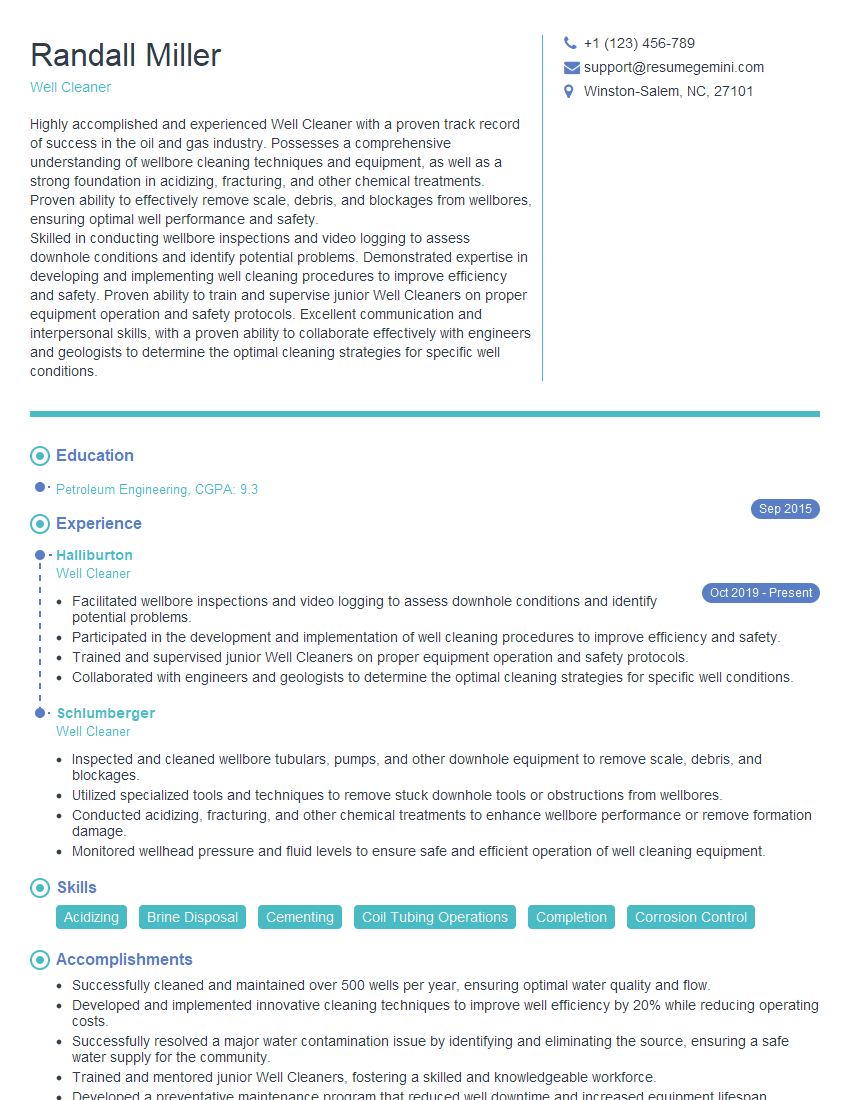
Feeling lost in a sea of interview questions? Landed that dream interview for Well Cleaner but worried you might not have the answers? You’re not alone! This blog is your guide for interview success. We’ll break down the most common Well Cleaner interview questions, providing insightful answers and tips to leave a lasting impression. Plus, we’ll delve into the key responsibilities of this exciting role, so you can walk into your interview feeling confident and prepared.
Acing the interview is crucial, but landing one requires a compelling resume that gets you noticed. Crafting a professional document that highlights your skills and experience is the first step toward interview success. ResumeGemini can help you build a standout resume that gets you called in for that dream job.






Essential Interview Questions For Well Cleaner
1. What are the different types of well cleaning methods and which method is most suitable for different types of wells?
- Mechanical cleaning: uses brushes, scrapers, and jets to remove scale, sludge, and other debris from the well casing and screen.
- Chemical cleaning: uses acids or other chemicals to dissolve scale and mineral deposits.
- Airlift cleaning: uses compressed air to lift water and debris from the well.
- Surge cleaning: uses a surge block or other device to create a pressure wave that dislodges debris from the well screen.
2. What are the safety precautions that should be taken when cleaning a well?
Personal protective equipment
- Wear gloves, eye protection, and a hard hat.
- Use a respirator if there is a risk of exposure to hazardous chemicals.
Other safety precautions
- Secure the well head to prevent it from moving or falling.
- Do not enter the well without proper ventilation.
- Be aware of the potential for electrical hazards.
3. What are the signs of a well that needs to be cleaned?
- Reduced water flow
- Cloudy or discolored water
- Bad taste or odor
- Sand or sediment in the water
- Bacterial contamination
4. What are the different types of well pumps and how do they work?
- Submersible pumps: operate underwater and are the most common type of pump used in wells.
- Jet pumps: use a venturi effect to create a vacuum that lifts water from the well.
- Centrifugal pumps: use a rotating impeller to move water.
- Hand pumps: use a piston or diaphragm to lift water from the well.
5. What are the different types of well screens and how are they used?
- Continuous-slot screens: have slots that run the entire length of the screen and are used for wells with fine-grained sand or silt.
- Slotted screens: have slots that are spaced at regular intervals and are used for wells with larger-grained sand or gravel.
- Perforated screens: have small holes that are punched into the screen and are used for wells with very fine-grained sand or silt.
6. What are the different types of well casings and how are they used?
- Steel casings: are the most common type of casing and are made of galvanized steel.
- PVC casings: are made of polyvinyl chloride and are corrosion-resistant.
- Concrete casings: are made of concrete and are used for wells with very corrosive water.
7. What are the different types of well seals and how are they used?
- Bentonite seals: are made of a clay mineral called bentonite and are used to seal the annular space between the well casing and the borehole.
- Cement seals: are made of cement and are used to seal the annular space between the well casing and the borehole and to protect the well from contamination.
- Mechanical seals: are made of a variety of materials and are used to seal the annular space between the well casing and the borehole and to prevent the flow of water between different aquifers.
8. What are the different types of well disinfection methods and how are they used?
- Chlorination: uses chlorine to kill bacteria and other microorganisms.
- Ultraviolet disinfection: uses ultraviolet light to kill bacteria and other microorganisms.
- Ozonation: uses ozone to kill bacteria and other microorganisms.
9. What are the different types of well testing methods and how are they used?
- Pumping tests: measure the flow rate and water level in a well to determine the well’s yield and efficiency.
- Slug tests: measure the water level in a well after a sudden change in water flow to determine the well’s hydraulic conductivity.
- Water quality tests: measure the chemical and physical properties of water to determine if it is safe for drinking.
10. What are the different types of well maintenance tasks and how are they performed?
- Cleaning: removes scale, sludge, and other debris from the well casing, screen, and pump.
- Disinfection: kills bacteria and other microorganisms in the well.
- Pump maintenance: replaces or repairs the well pump as needed.
- Well sealing: repairs or replaces the well seal to prevent contamination.
Interviewers often ask about specific skills and experiences. With ResumeGemini‘s customizable templates, you can tailor your resume to showcase the skills most relevant to the position, making a powerful first impression. Also check out Resume Template specially tailored for Well Cleaner.
Career Expert Tips:
- Ace those interviews! Prepare effectively by reviewing the Top 50 Most Common Interview Questions on ResumeGemini.
- Navigate your job search with confidence! Explore a wide range of Career Tips on ResumeGemini. Learn about common challenges and recommendations to overcome them.
- Craft the perfect resume! Master the Art of Resume Writing with ResumeGemini’s guide. Showcase your unique qualifications and achievements effectively.
- Great Savings With New Year Deals and Discounts! In 2025, boost your job search and build your dream resume with ResumeGemini’s ATS optimized templates.
Researching the company and tailoring your answers is essential. Once you have a clear understanding of the Well Cleaner‘s requirements, you can use ResumeGemini to adjust your resume to perfectly match the job description.
Key Job Responsibilities
Well Cleaners are responsible for maintaining and cleaning water wells and associated equipment to ensure a safe and efficient water supply. Their tasks include:
1. Well Maintenance
Inspect and clean wells to remove sediment, debris, and other contaminants to maintain proper functionality and water quality.
- Inspect well casings, screens, and pumps for damage or wear
- Clean and disinfect well components using appropriate chemicals and techniques
2. Equipment Repair and Maintenance
Perform basic repairs and maintenance on well equipment, such as pumps, valves, and electrical systems to ensure optimal operation.
- Troubleshoot and resolve equipment malfunctions
- Replace worn or damaged parts
3. Water Quality Monitoring
Collect and analyze water samples to monitor water quality and ensure compliance with regulatory standards and customer requirements.
- Conduct water testing for parameters such as bacteria, pH, and chlorine levels
- Interpret test results and take corrective actions as needed
4. Safety and Compliance
Adhere to safety protocols and regulations related to well cleaning and maintenance to protect themselves, the public, and the environment.
- Wear appropriate personal protective equipment (PPE) when working with hazardous materials
- Follow proper waste disposal procedures
Interview Tips
To ace the interview for a Well Cleaner position, consider the following tips:
1. Research the Company and Role
Familiarize yourself with the company’s history, values, and the specific requirements of the Well Cleaner role. This will help you tailor your answers to the interviewer’s questions and demonstrate your enthusiasm for the position.
- Review the company’s website and social media pages
- Search for news articles or industry reports related to the company
2. Prepare Your Answers
Anticipate common interview questions and prepare thoughtful answers that highlight your skills and experience. Use the STAR method (Situation, Task, Action, Result) to provide detailed examples of your work history.
- Example Outline:
- Situation: Describe a time when you were faced with a challenging well maintenance issue.
- Task: Explain the steps you took to diagnose and resolve the problem.
- Action: Highlight the specific techniques or tools you used.
- Result: Quantify your results, if possible, such as increased water flow or improved water quality.
3. Emphasize Safety and Compliance
Well cleaning involves handling hazardous materials and adhering to safety regulations. Assure the interviewer that you prioritize safety and are knowledgeable about industry standards and best practices.
- Mention your experience in using personal protective equipment and following waste disposal protocols.
- Discuss your knowledge of relevant safety regulations and certifications.
4. Showcase Your Physical Fitness
Well cleaning often involves strenuous physical labor. Be prepared to discuss your physical fitness and ability to perform tasks such as lifting heavy equipment and working in confined spaces.
- Provide examples of your physical stamina and strength.
- Explain how you stay physically fit and maintain a healthy lifestyle.
5. Ask Informed Questions
Asking thoughtful questions at the end of the interview shows that you are engaged and interested in the role. Prepare questions about the company’s commitment to water quality, safety policies, or opportunities for professional development.
- Example Questions:
- “Could you elaborate on the company’s water quality monitoring protocols?”
- “What is the company’s policy on employee safety and training?”
- “Are there opportunities for professional advancement or additional certifications within the company?”
Next Step:
Now that you’re armed with a solid understanding of what it takes to succeed as a Well Cleaner, it’s time to turn that knowledge into action. Take a moment to revisit your resume, ensuring it highlights your relevant skills and experiences. Tailor it to reflect the insights you’ve gained from this blog and make it shine with your unique qualifications. Don’t wait for opportunities to come to you—start applying for Well Cleaner positions today and take the first step towards your next career milestone. Your dream job is within reach, and with a polished resume and targeted applications, you’ll be well on your way to achieving your career goals! Build your resume now with ResumeGemini.