Are you gearing up for a career shift or aiming to ace your next interview? Look no further! We’ve curated a comprehensive guide to help you crack the interview for the coveted Forming Machine Operator position. From understanding the key responsibilities to mastering the most commonly asked questions, this blog has you covered. So, buckle up and let’s embark on this journey together.
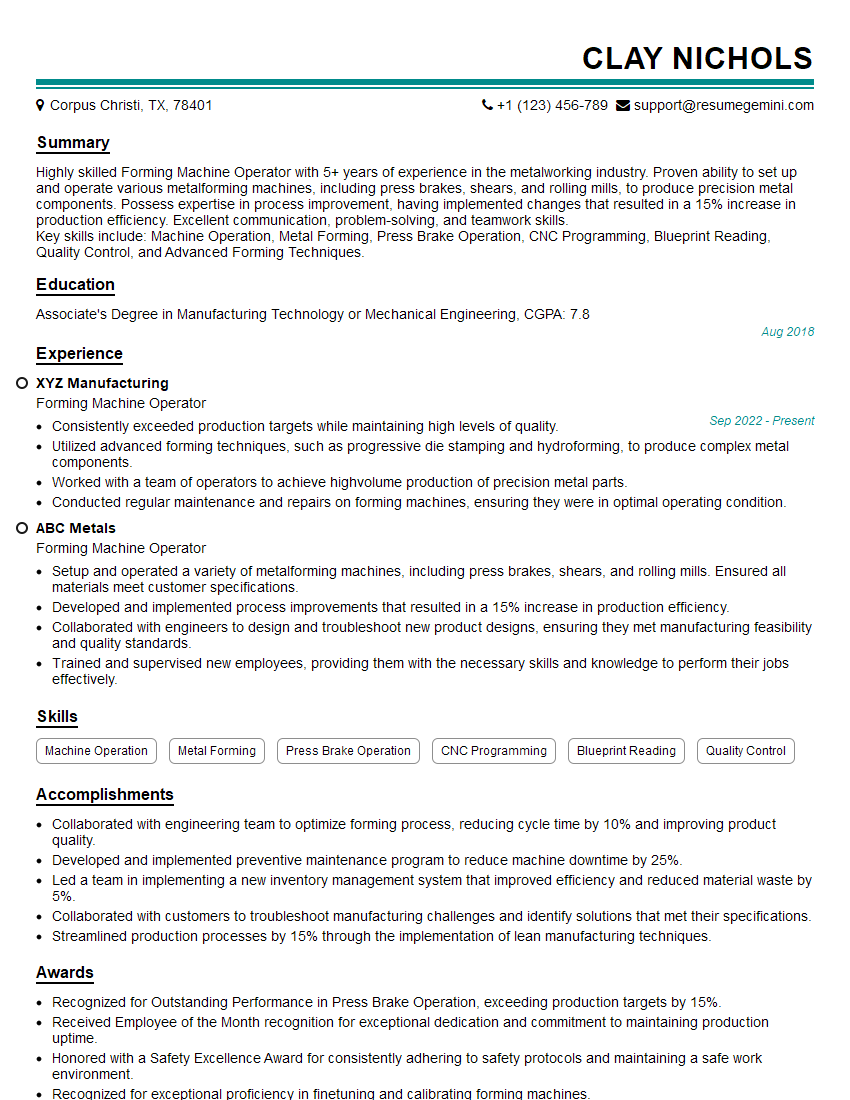
Acing the interview is crucial, but landing one requires a compelling resume that gets you noticed. Crafting a professional document that highlights your skills and experience is the first step toward interview success. ResumeGemini can help you build a standout resume that gets you called in for that dream job.






Essential Interview Questions For Forming Machine Operator
1. Explain the role of a Forming Machine Operator?
- A Forming Machine Operator is responsible for the operation and maintenance of forming machines, which are used to shape and form metal parts.
- They set up and operate the machines, ensuring that they are running correctly and producing parts that meet the required specifications.
- They also monitor the machines during operation, making adjustments as needed and troubleshooting any problems that may arise.
- They may also be responsible for maintaining the machines, performing routine maintenance and repairs as needed.
2. What are the key skills required to be a successful Forming Machine Operator?
Technical Skills
- Knowledge of forming machine operation and maintenance
- Ability to read and interpret blueprints and technical drawings
- Experience with metalworking tools and equipment
- Understanding of metal properties and forming processes
- Basic knowledge of electrical and mechanical systems
Soft Skills
- Attention to detail
- Problem-solving skills
- Ability to work independently and as part of a team
- Strong communication skills
- Ability to work in a fast-paced environment
3. What are the different types of forming machines that you have operated?
- Press brakes
- Roll forming machines
- Stretch forming machines
- Hydroforming machines
- Tube benders
4. Describe the process of setting up a forming machine?
- Read and understand the blueprints or technical drawings for the part to be formed.
- Select the appropriate tooling and materials.
- Mount the tooling on the machine.
- Adjust the machine settings according to the specifications.
- Load the material into the machine.
- Test run the machine to ensure proper operation.
5. How do you monitor and maintain a forming machine?
- Visually inspect the machine for any signs of wear or damage.
- Monitor the machine’s performance during operation, checking for any unusual noises or vibrations.
- Lubricate the machine according to the manufacturer’s recommendations.
- Clean the machine regularly to remove any dirt or debris.
- Perform routine maintenance as needed, such as replacing worn parts or adjusting the machine’s settings.
6. What are some of the common problems that you have encountered with forming machines and how did you resolve them?
- Machine breakdowns
- Tooling wear
- Material defects
- Quality control issues
- Safety concerns
7. How do you ensure that the parts produced by the forming machine meet the required specifications?
- Inspect the parts visually for any defects.
- Measure the parts to ensure that they meet the dimensional requirements.
- Perform functional tests to ensure that the parts are working properly.
- Compare the parts to the blueprints or technical drawings to ensure that they meet the specifications.
8. What is your experience with working with different types of materials on a forming machine?
- Steel
- Aluminum
- Copper
- Brass
- Plastic
9. What are some of the safety precautions that you take when operating a forming machine?
- Wear appropriate safety gear, such as safety glasses, gloves, and hearing protection.
- Keep the work area clean and free of debris.
- Be aware of the location of the emergency stop button.
- Never operate the machine when it is not properly guarded.
- Follow all safety procedures established by the company.
10. What are your career goals as a Forming Machine Operator?
- I would like to develop my skills as a Forming Machine Operator and learn more about the industry.
- I would like to advance my career and become a supervisor or manager in the future.
- I would like to work for a company that is a leader in the metalworking industry.
- I would like to contribute to the company’s success by producing high-quality parts and helping to meet the needs of our customers.
Interviewers often ask about specific skills and experiences. With ResumeGemini‘s customizable templates, you can tailor your resume to showcase the skills most relevant to the position, making a powerful first impression. Also check out Resume Template specially tailored for Forming Machine Operator.
Career Expert Tips:
- Ace those interviews! Prepare effectively by reviewing the Top 50 Most Common Interview Questions on ResumeGemini.
- Navigate your job search with confidence! Explore a wide range of Career Tips on ResumeGemini. Learn about common challenges and recommendations to overcome them.
- Craft the perfect resume! Master the Art of Resume Writing with ResumeGemini’s guide. Showcase your unique qualifications and achievements effectively.
- Great Savings With New Year Deals and Discounts! In 2025, boost your job search and build your dream resume with ResumeGemini’s ATS optimized templates.
Researching the company and tailoring your answers is essential. Once you have a clear understanding of the Forming Machine Operator‘s requirements, you can use ResumeGemini to adjust your resume to perfectly match the job description.
Key Job Responsibilities
Forming Machine Operators are responsible for operating and maintaining forming machines used to shape metal and other materials into various forms. These machines can include press brakes, shearers, rollers, and benders. The main duties of a Forming Machine Operator include:
1. Machine Operation
- Setup and operate forming machines following blueprints, specifications, and instructions.
- Adjust settings, such as pressure, speed, and temperature, to ensure optimal machine performance.
- Monitor machine operations, identify malfunctions or irregularities, and take corrective actions.
2. Material Handling
- Load and unload materials into and from the forming machine, ensuring proper loading and alignment.
- Inspect materials before and after forming to ensure they meet specifications.
- Handle and store materials safely, using appropriate equipment and techniques.
3. Quality Inspection
- Inspect formed parts for accuracy, dimensions, and surface finish.
- Use measuring and gauging instruments to verify compliance with specifications.
- Identify and report any defects or inconsistencies.
4. Machine Maintenance
- Clean and lubricate machines, ensuring they are in good working condition.
- Perform basic troubleshooting and repairs on machines.
- Report any major issues or maintenance needs to supervisors.
Interview Tips
Preparing effectively for a Forming Machine Operator interview is crucial to increase your chances of success. Here are some tips to help you ace the interview:
1. Research the Company and Industry
- Visit the company website and social media pages to learn about their products, services, and culture.
- Research the forming machine industry, including the latest advancements and technologies.
- Identify any unique skills or experience relevant to the position.
2. Practice Common Interview Questions
- Prepare for common interview questions related to your skills, experience, and qualifications.
- Practice answering questions about your ability to operate forming machines, handle materials, and inspect formed parts.
- Consider behavioral interview questions that ask about your problem-solving, teamwork, and attention to detail.
3. Highlight Relevant Skills and Experience
- Emphasize your experience operating forming machines and handling different materials.
- Showcase your proficiency in quality inspection and measurement techniques.
- Discuss any safety protocols and maintenance procedures you have followed.
4. Demonstrate Enthusiasm and Passion
- Express your interest in the forming machine industry and your passion for working with machinery.
- Share examples of how you have applied your skills and knowledge to solve problems.
- Show that you are eager to learn and grow in this field.
5. Be Well-Groomed and Professional
- Dress appropriately for the interview, typically business casual attire.
- Maintain good posture and make eye contact during the interview.
- Speak clearly and confidently, and be respectful of the interviewer.
Next Step:
Armed with this knowledge, you’re now well-equipped to tackle the Forming Machine Operator interview with confidence. Remember, preparation is key. So, start crafting your resume, highlighting your relevant skills and experiences. Don’t be afraid to tailor your application to each specific job posting. With the right approach and a bit of practice, you’ll be well on your way to landing your dream job. Build your resume now from scratch or optimize your existing resume with ResumeGemini. Wish you luck in your career journey!