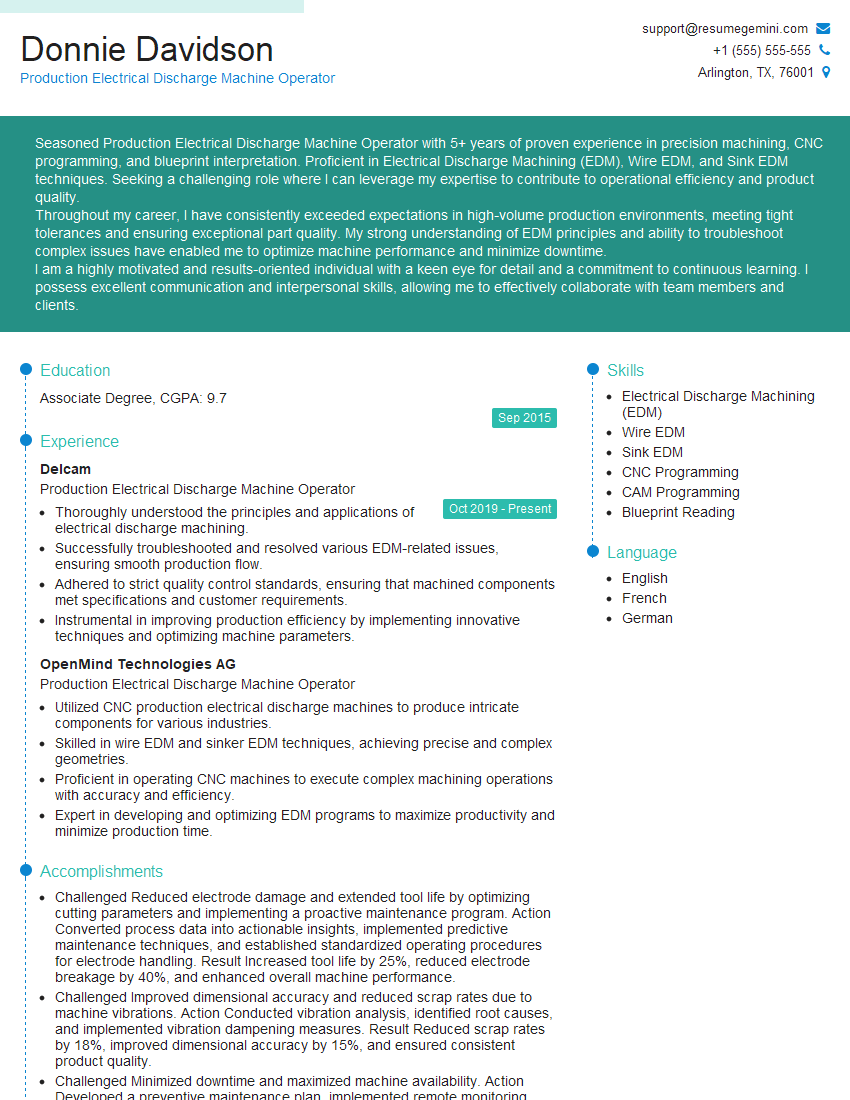
Are you gearing up for an interview for a Production Electrical Discharge Machine Operator position? Whether you’re a seasoned professional or just stepping into the role, understanding what’s expected can make all the difference. In this blog, we dive deep into the essential interview questions for Production Electrical Discharge Machine Operator and break down the key responsibilities of the role. By exploring these insights, you’ll gain a clearer picture of what employers are looking for and how you can stand out. Read on to equip yourself with the knowledge and confidence needed to ace your next interview and land your dream job!
Acing the interview is crucial, but landing one requires a compelling resume that gets you noticed. Crafting a professional document that highlights your skills and experience is the first step toward interview success. ResumeGemini can help you build a standout resume that gets you called in for that dream job.






Essential Interview Questions For Production Electrical Discharge Machine Operator
1. How would you determine the correct electrode for a given EDM application?
When determining the correct electrode for a given EDM application, I consider several factors:
- Material of the workpiece: Different materials require different types of electrodes. For example, graphite electrodes are commonly used for ferrous materials, while copper electrodes are suitable for non-ferrous materials.
- Geometry of the desired cut: The shape and dimensions of the required cut will influence the choice of electrode. For instance, a cylindrical electrode would be used for a circular cut.
- EDM process parameters: The specific EDM process parameters, such as current, voltage, and pulse duration, also affect the electrode selection. Higher currents and longer pulse durations generally require larger electrodes.
2. Can you explain the difference between sinker EDM and wire EDM?
Sinker EDM
- Uses a graphite electrode to shape the workpiece by submerging both the electrode and workpiece in a dielectric fluid.
- The electrode is moved vertically towards the workpiece, eroding the material by creating electrical sparks.
- Suitable for creating complex shapes and intricate details in hard materials.
Wire EDM
- Employs a continuously moving wire electrode to cut through the workpiece.
- The wire is guided by a CNC program to follow the desired cutting path.
- Capable of producing precise and smooth cuts with minimal burrs.
3. How do you ensure the accuracy of EDM cuts?
To ensure the accuracy of EDM cuts, I adhere to the following practices:
- Proper machine setup: Calibrating the EDM machine regularly and ensuring that all axes are aligned precisely.
- Selecting the appropriate electrode: Choosing an electrode that is suitable for the workpiece material and desired cut geometry.
- Optimizing EDM parameters: Adjusting the current, voltage, and pulse duration to achieve the desired cutting speed and surface finish.
- Using precision measuring tools: Employing micrometers, calipers, and coordinate measuring machines (CMMs) to verify the accuracy of the finished parts.
4. What are the common quality issues that can occur in EDM and how do you address them?
Some common quality issues in EDM and their solutions include:
- Overcut: Maintaining a proper gap between the electrode and workpiece and adjusting the EDM parameters can prevent excessive material removal.
- Undercut: Using a larger electrode or increasing the current can alleviate undercut.
- Wire breakage in wire EDM: Optimizing wire tension, flushing conditions, and electrode path can minimize wire breakage.
- Surface roughness: Selecting the appropriate electrode material, optimizing EDM parameters, and using post-processing techniques (e.g., polishing) can improve surface finish.
5. How do you maintain and troubleshoot EDM equipment?
To maintain and troubleshoot EDM equipment, I follow these steps:
- Regular maintenance: Adhering to the manufacturer’s recommendations for cleaning, lubrication, and inspection.
- Problem identification: Using diagnostic tools and analyzing error messages to identify the source of issues.
- Component replacement: Replacing worn or damaged components, such as electrodes, filters, and pumps.
- Calibration and adjustments: Ensuring that the machine is calibrated and adjusted properly to maintain accuracy.
6. What safety precautions should be followed when operating EDM equipment?
When operating EDM equipment, I prioritize the following safety precautions:
- Electrical safety: Ensuring that the machine is properly grounded and using insulated tools when handling electrical components.
- Fluid handling: Wearing appropriate protective gear (e.g., gloves, apron) and maintaining proper ventilation to minimize exposure to dielectric fluids.
- Sparks and debris: Utilizing safety shields and eye protection to prevent injury from sparks and flying debris.
- Machine operation: Following proper lockout/tagout procedures and remaining alert to potential hazards during machine operation.
7. Describe the different types of EDM fluids and their applications.
Different EDM fluids are used depending on the specific application:
- Hydrocarbon-based fluids: Suitable for machining ferrous materials and providing good flushing and cooling properties.
- Deionized water: Commonly used with wire EDM, providing high flushing efficiency and good surface finish.
- Mixed dielectric fluids: Blends of hydrocarbon-based fluids and deionized water, offering a balance of flushing and cooling capabilities.
8. How do you determine the optimal EDM settings for a specific material and application?
To determine the optimal EDM settings, I consider the following factors:
- Material properties: Electrical and thermal conductivity, hardness, and melting point influence the choice of settings.
- Desired cut quality: The required accuracy, surface finish, and taper angle guide the selection of parameters.
- Machine capabilities: The power supply, axis control, and fluid filtration capabilities of the EDM machine limit the available settings.
- Experimentation and optimization: Testing different settings and analyzing the results help fine-tune the parameters for specific applications.
9. Can you explain the role of dielectric flushing in EDM and its impact on the process?
Dielectric flushing in EDM serves several crucial purposes:
- Cooling: The dielectric fluid removes heat from the workpiece and electrode, preventing thermal damage.
- Flushing: It carries away debris and molten material from the cutting zone, maintaining a clean and stable gap.
- Insulation: The dielectric fluid provides electrical insulation between the workpiece and electrode, preventing short circuits.
- Lubrication: In wire EDM, the dielectric fluid lubricates the wire, reducing friction and wire breakage.
10. What are the advantages of using EDM over traditional machining methods?
EDM offers several advantages over traditional machining methods:
- Complex geometries: EDM can create intricate shapes and complex geometries that are difficult or impossible to achieve with conventional machining.
- Hard materials: EDM is capable of machining hardened materials and exotic alloys that are challenging to cut using other methods.
- Minimal tool wear: The electrode does not make direct contact with the workpiece, eliminating tool wear and reducing production costs.
- Precision: EDM provides high accuracy and repeatability, making it suitable for precision manufacturing applications.
Interviewers often ask about specific skills and experiences. With ResumeGemini‘s customizable templates, you can tailor your resume to showcase the skills most relevant to the position, making a powerful first impression. Also check out Resume Template specially tailored for Production Electrical Discharge Machine Operator.
Career Expert Tips:
- Ace those interviews! Prepare effectively by reviewing the Top 50 Most Common Interview Questions on ResumeGemini.
- Navigate your job search with confidence! Explore a wide range of Career Tips on ResumeGemini. Learn about common challenges and recommendations to overcome them.
- Craft the perfect resume! Master the Art of Resume Writing with ResumeGemini’s guide. Showcase your unique qualifications and achievements effectively.
- Great Savings With New Year Deals and Discounts! In 2025, boost your job search and build your dream resume with ResumeGemini’s ATS optimized templates.
Researching the company and tailoring your answers is essential. Once you have a clear understanding of the Production Electrical Discharge Machine Operator‘s requirements, you can use ResumeGemini to adjust your resume to perfectly match the job description.
Key Job Responsibilities for a Production Electrical Discharge Machine Operator
Production Electrical Discharge Machine Operators play a vital role in ensuring the efficient and accurate production of parts and components using Electrical Discharge Machining (EDM) technology. The key job responsibilities typically include:
1. Machine Operation and Setup
Setting up and operating Electrical Discharge Machines to produce parts according to specifications and drawings.
- Selecting and installing electrodes and workpieces.
- Programming and controlling machine parameters, such as voltage, current, and pulse duration.
- Monitoring machine operation and adjusting settings to optimize performance.
2. Quality Control
Conducting quality inspections and testing to ensure parts meet specified tolerances and quality standards.
- Measuring and inspecting parts using appropriate tools and gauges.
- Identifying and correcting any defects or deviations.
- Maintaining quality records and documentation.
3. Maintenance and Troubleshooting
Performing preventive maintenance and troubleshooting tasks to ensure optimal machine performance and reliability.
- Inspecting and cleaning machines and components.
- Identifying and resolving any mechanical or electrical issues.
- Coordinating with maintenance technicians for major repairs or overhauls.
4. Production Planning and Scheduling
Assisting in production planning and scheduling to optimize machine utilization and meet delivery deadlines.
- Reviewing production orders and determining machine availability.
- Scheduling jobs and setting up machines accordingly.
- Coordinating with other production departments to ensure smooth workflow.
5. Safety and Compliance
Adhering to safety protocols and following established procedures to ensure a safe work environment.
- Wearing appropriate personal protective equipment.
- Following lockout/tagout procedures.
- Maintaining a clean and organized work area.
Interview Preparation Tips for Production Electrical Discharge Machine Operators
To prepare effectively for an interview as a Production Electrical Discharge Machine Operator, consider the following tips:
1. Research the Company and Role
Familiarize yourself with the company’s background, industry, and specific role responsibilities.
- Visit the company’s website and social media pages.
- Read industry news and articles to understand the latest trends and developments.
- Review the job description carefully and identify the essential qualifications and skills.
2. Highlight Relevant Experience and Skills
Emphasize your experience and abilities that align with the job requirements.
- Showcase your proficiency in operating and programming EDM machines.
- Demonstrate your understanding of quality control procedures and techniques.
- Provide examples of your troubleshooting and problem-solving skills.
3. Practice Answering Common Interview Questions
Prepare for potential interview questions and formulate thoughtful responses.
- Tell me about your experience operating EDM machines.
- How do you ensure the quality and accuracy of parts produced on EDM machines?
- Describe a situation where you identified and resolved a problem with an EDM machine.
4. Be Enthusiastic and Professional
During the interview, maintain a positive and enthusiastic demeanor.
- Dress professionally and arrive on time.
- Be polite and respectful to everyone you encounter.
- Demonstrate your passion for the role and your eagerness to contribute to the team.
5. Ask Informed Questions
Prepare thoughtful questions to ask the interviewer, demonstrating your interest in the role and the company.
- What are the company’s current and future goals in the EDM industry?
- What opportunities are there for professional development and advancement?
- What steps can I take to ensure my success in this role?
Next Step:
Now that you’re armed with the knowledge of Production Electrical Discharge Machine Operator interview questions and responsibilities, it’s time to take the next step. Build or refine your resume to highlight your skills and experiences that align with this role. Don’t be afraid to tailor your resume to each specific job application. Finally, start applying for Production Electrical Discharge Machine Operator positions with confidence. Remember, preparation is key, and with the right approach, you’ll be well on your way to landing your dream job. Build an amazing resume with ResumeGemini